

Key Takeaways
- Ideal for Lump-Sum Investors: STP in mutual fund helps you move a large amount into equity gradually instead of investing everything on one market day.
- Your Money Earns While You Wait: The lump sum stays in a liquid or debt fund and earns returns until each scheduled transfer happens.
- Smoother Market Entry: By buying at multiple price points, Systematic Transfer Plan reduces timing risk and naturally averages your purchase cost.
- Different STP Types Suit Different Needs: You can choose fixed, flexible, or capital-appreciation STPs depending on how much control and safety you want.
- Each Transfer Is Taxable: Every STP shift counts as a redemption from the source fund, so taxes and exit loads may apply and always check your scheme rules.
- Key Takeaways
- What is STP in Mutual Funds?
- Types of Systematic Transfer Plans
- Features of Systematic Transfer Plan
- Benefits of Systematic Transfer Plan
- Structure of a Systematic Transfer Plan
- How do Systematic Transfer Plans Work?
- Tax Treatment of Systematic Transfer Plan
- Common Mistakes to Avoid in Systematic Transfer Plan
- SIP vs STP
- Conclusion
- Frequently Asked Questions (FAQs)
Imagine this: you just received a ₹10 lakh bonus. You’re optimistic about India’s growth, but the market’s mood swings make you nervous about deploying the full amount at once.
Do you park it in a savings account (hello, low interest) or put it all into equities and pray the timing gods are kind? Or, you can take the help of Systematic Transfer Plan (STP).
What is STP in Mutual Funds?
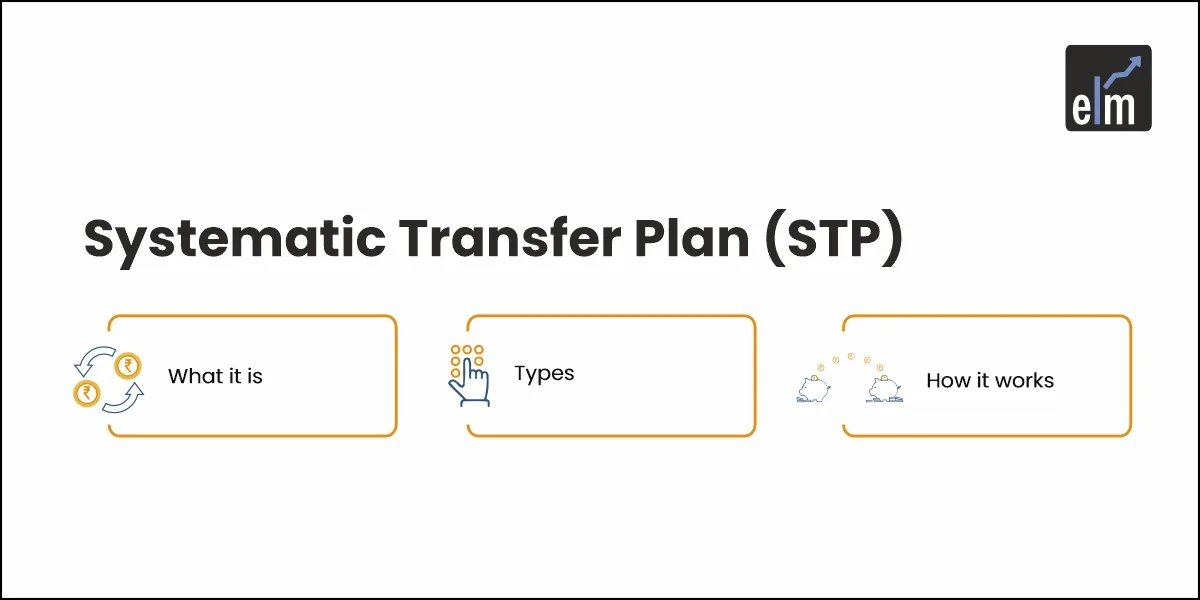
A Systematic Transfer Plan (STP) is simply an automated way to move your money from one mutual fund to another at regular intervals.
Think of it as a monthly “fund-to-fund conveyor belt” that shifts a fixed amount from one scheme (usually a debt fund or liquid fund) into another (typically an equity fund) without you having to log in each time and make the switch manually.
Most investors use STPs for two big reasons:
- To stagger investments into equity instead of dumping a lump sum at once.
For example, if you have ₹6 lakh lying idle, instead of putting all of it into an equity fund on a day when the market “looks good,” an STP lets you park it in a liquid fund and gradually shift (say ₹50,000 per month) into the equity scheme. This reduces timing risk drastically. - To rebalance their portfolio from equity to debt systematically.
If your equity fund has grown too much after a big bull run, STP helps you slowly move gains back to safety without triggering emotional decisions.
In short: STP = SIP + risk-management + automation rolled into one.
Types of Systematic Transfer Plans
There are three common flavors of STP:
- Flexible STP — Think of this as the “you’re in the driver’s seat” option. You pick how much to move and when, so if you want to increase transfers after a market dip or pause them when things look frothy, you can. It’s for investors who want control and the ability to react.
- Fixed STP — The autopilot option or the same sum gets shifted on a steady schedule you choose (weekly, monthly, etc.). Set it up once and it runs itself. Great if you prefer routine, discipline, and a predictable, no-drama flow into the target fund.
- Capital-appreciation STP — Here only the gains get moved to the equity (or target) fund; your original principal stays put in the source fund. It’s a conservative way to lock in profits while keeping the core capital protected.
Features of Systematic Transfer Plan
A few operational points to keep in mind:

- SEBI itself doesn’t mandate a minimum STP amount, but many AMCs require a minimum (commonly around ₹12,000) to open the plan.
- Most STPs require a minimum number of transfers (six is frequently seen) to activate the facility.
- Also, Entry loads are not charged on STP transfers, but exit loads may apply (some AMCs charge up to 2% on redemptions depending on the scheme).
- Every transfer counts as a redemption from the source fund and a new investment in the target fund, important for tax treatment.
Benefits of Systematic Transfer Plan
Why do investors choose Systematic Transfer Plan? Here are the key reasons:
- Earn more than a sleepy bank account
Why let a big pile of cash sit and earn next-to-nothing? With an STP your money lives in a liquid or debt fund initially, so it’s working for you, and then it’s moved into equity in bites. In short: your idle cash keeps earning something while you slowly chase higher returns. - Automatic rupee-cost averaging (without the drama)
Instead of trying to pick the “perfect” day to buy, you buy in parts over time. That means you pick up units at different price levels, which usually lowers your average purchase price and personally, it saves you from the endless agonizing of timing the market. - Calmer rides when markets wobble
If markets tank on a single day, you won’t have put all your money in at that moment. Staggered entries mean one bad day hurts less; your exposure builds gradually, not in one heart-stopping lump. - A built-in risk buffer
While transfers are underway you own both debt (the safety cushion) and equity (the growth engine). That combination gives you upside potential but with a softer downside, a sensible middle ground for many investors.
Structure of a Systematic Transfer Plan
Operationally, STP requires:
- A source fund (liquid/debt) where the lump sum sits.
- A target fund (equity) that receives transfers.
- Frequency and amount (weekly/monthly, fixed or flexible).
- A chosen duration (6, 9, 12 months or more).
AMCs set their own minimums and transfer rules, so check the scheme documents before you start.
How do Systematic Transfer Plans Work?
Let’s get your ₹10 lakh as an example:
- You invest ₹10 lakh in a liquid fund on the first day.
- You set an STP to transfer ₹83,333 monthly for 12 months into an equity fund.
- Every month, the AMC gets ₹83,333 from the liquid fund and invests it in the equity fund at that month’s NAV.
- Over 12 months, your full ₹10 lakh is moved into equities but at staggered entry points, smoothing out volatility risk.
Operationally, each transfer is treated as a partial redemption (from the liquid fund) and a new purchase in the equity scheme. That’s why tax and exit-load implications apply.
Tax Treatment of Systematic Transfer Plan
Here’s a critical consideration, every STP transfer is treated as a redemption from the source fund and a new investment into the target fund. That means capital-gains tax rules apply on each partial redemption. Importantly, from April 1, 2023, tax rules for debt mutual funds changed gains on investments made on or after that date are treated differently and can be taxed at your slab rate (depending on specifics). This can materially affect returns for investors using debt funds as source portfolios. Always factor tax into your expected net returns.
Common Mistakes to Avoid in Systematic Transfer Plan
Avoid these pitfalls:
- Using STP when you need short-term liquidity. If you may need the money within months, STP defeats the purpose.
- Ignoring exit loads and taxes. Frequent transfers can generate costs that crave into returns.
- Stopping the STP mid-way, it undermines the intended averaging and discipline.
Picking inappropriate source or target funds. Don’t park in a higher-risk source fund or target a highly volatile, ill-suited equity scheme.
SIP vs STP
They look similar but serve different needs:
SIP (Systematic Investment Plan) is for regular saves. You invest a fixed amount from your income into a fund each month.
STP is for lump-sum holders who want to deploy cash gradually. Both are disciplined tools; the choice comes down to whether you’re channeling regular cashflows (SIP) or phasing an existing lump sum (STP).
Conclusion
If you’ve got a sizable idle sum and want exposure to equities without the stress of timing the market, an STP is a smart middle path. It offers discipline, rupee-cost averaging, and potentially higher returns than a savings account — but it’s not risk-free. Watch out for tax impacts, exit loads, and minimum transfer rules set by AMCs.
If you’re unsure which Systematic Transfer Plan fits you – fixed, flexible, or capital appreciation. Consult a financial advisor or your AMC’s advisor. And remember, STP is a strategy to manage timing risk, not a guarantee against losses.
Frequently Asked Questions (FAQs)
1. What does STP in mutual funds stand for?
STP means Systematic Transfer Plan.
2. How much do I need to start an STP?
There’s no universal floor set by the regulator; SEBI doesn’t insist on a minimum. That said, many fund houses do set their own minimums (you’ll often see figures around ₹12,000). Always check the scheme document before you sign up.
3. Will I pay charges or exit loads when using an STP?
You normally won’t see an entry fee for transfers, but exit loads can apply depending on the fund’s rules. Also remember that every transfer is treated as a redemption for tax purposes, so capital gains tax may apply on those partial redemptions.
4. Which STP type should I pick – fixed, flexible, or capital-appreciation?
It depends on your temperament and goal. Fixed STPs are simple and disciplined; flexible STPs let you tweak amounts and timing; capital-appreciation STPs move only the gains, keeping your principal safer. Pick the one that matches how active or conservative you want to be.
5. Is STP better than SIP?
Not inherently. They solve different problems. SIPs are for steady monthly investments from your income. STPs are for deploying an existing lump sum gradually. Choose the tool that fits your cashflow and objective, not one because it sounds “better.”