


Key Takeaways
- A Specialized Investment Fund (SIF) is a SEBI-regulated, multi-asset investment vehicle with a ₹10 lakh minimum investment.
- SIF offers exposure to equity, debt, REITs/InvITs, and derivatives under professional management.
- Designed for investors seeking advanced strategies and greater control without the high PMS entry barrier.
- Specialized Investment Funds allow for hybrid strategies, sector rotation, long-short positions, and alternative asset allocation.
- Compared to mutual funds, SIFs offer more tactical flexibility but come with higher risk and lower liquidity.
Specialized Investment Fund (SIF) is part of SEBI’s Category III AIF framework and not a mutual fund. However, many investors compare it to mutual funds and SIPs because it serves as the next step for those who want more advanced strategies.
What is SIF (Specialized Investment Funds)?
Mutual funds always felt too protective? But never had the resources or knowledge to get into derivatives?
Maybe there’s something new for you. SEBI’s brand-new offering is the Specialized Investment Fund.
If you’ve outgrown plain-vanilla mutual funds but can’t (or don’t want to) meet the steep ₹50 lakh entry barrier of a Portfolio Management Service (PMS), this might be your next logical step.
A SIF is a regulated, multi-asset fund that allows exposure to equity, debt, REITs/InvITs, and yes, even derivatives. All under one professionally managed roof.
What is SIF Investment?
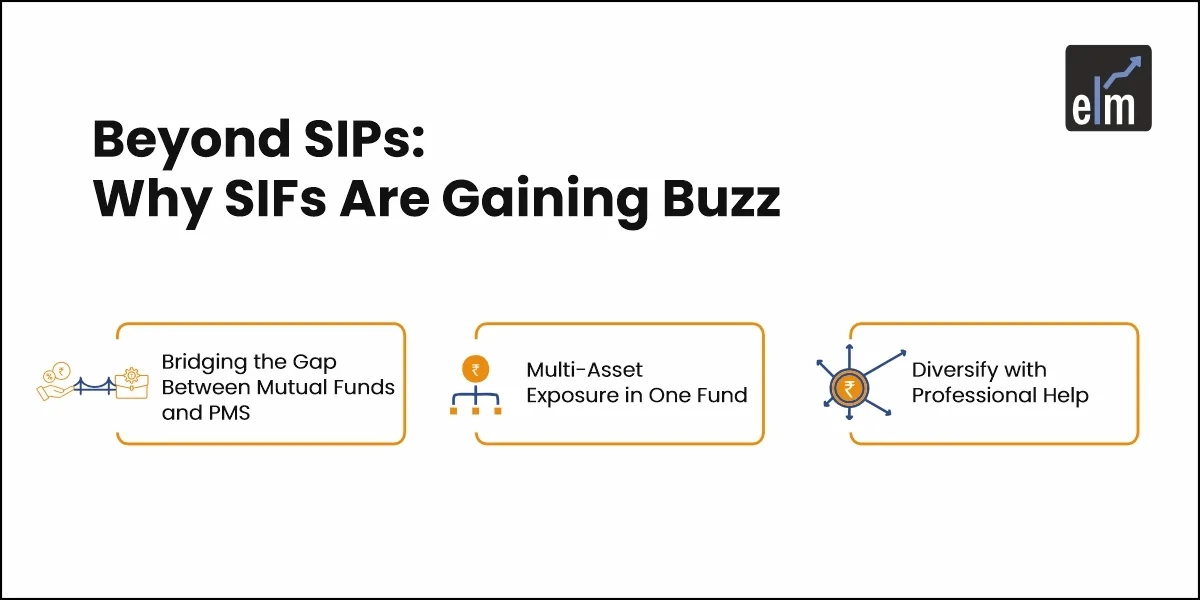
A Specialized Investment Fund (SIF) is a new investment structure introduced under SEBI’s AIF Category III framework, designed to bridge the gap between regular mutual funds and high-ticket PMS.
SEBI’s attempt to close the gap between the ultra-premium PMS segment and basic mutual funds is known as SIF investment funds. These funds are designed for investors who desire greater complexity and control over their portfolio without having to invest heavily or directly in the derivatives market.
Several Assets in a Single Fund
SIFs can mix different asset classes, in contrast to most mutual funds that only invest in debt or equity:
- Long-term capital growth through stocks
- Stability-promoting debt instruments
- REITs and InvITs for diversification and consistent revenue
- Hedging and tactical play derivatives
Investors can get a far more comprehensive portfolio in a single product with these SIF funds.
Entry Requirements & Who Can Invest?
To invest in a SIF, you need a minimum of ₹10 lakh. While this is higher than SIPs or regular mutual funds, it’s still far more accessible than PMS. In some cases, experienced investors or SEZ participants may get a waiver.
Also Read: How to Invest in Mutual Funds?
SIP vs SIF: Which One is Better?
Why is SIF Being Talked About So Much?
SIFs, part of AIF Category III, bring in advanced investing strategies including derivatives, hedging, tactical calls, and multi-asset exposure.
Mutual funds (via SIPs) are designed for the retail investor. They’re easy, reliable, and long-term focused, but come with limited strategy. They typically take only long positions, riding the market upwards and sitting tight during downtrends.
PMS, on the other hand, offers advanced investing strategies like long/short positions, sector-specific bets, and custom portfolios but with a hefty ₹50 lakh entry fee.
So, SIF offers a middle path, advanced strategies, tactical exposure, and lower entry cost.
The Case for SIPs: Simplicity, Affordability, Long-Term Growth
SIPs (Systematic Investment Plans) in mutual funds are ideal for beginners or anyone looking for:
- Affordable investment (starting from ₹500/month)
- Low risk, highly regulated environment
- Long-term, passive wealth creation
- Daily liquidity and ease of use
They’re built for investors who want peace of mind and don’t wish to time the market or make active bets.
Where SIFs Outshine: Flexibility, Advanced Strategies, Tactical Plays
Specialized Investment Funds offer you a more active and tactical investing approach, including:
- Shorting falling sectors
- Hedging through derivatives
- Mixing asset classes to suit market conditions
- Chasing real estate-linked income via REITs/InvITs
For someone looking to go beyond basic investing and tap into professional strategies, It opens up a new door.
SIPs are perfect if you want simplicity, low risk, and are still accumulating wealth.
SIFs are worth looking into if you have some capital and would like better diversification and access to active strategies.
Your decision should be based on your level of investment expertise, capital availability, and risk tolerance.
Types of Strategies: Hybrid, Sector Rotation, Long-Short, and Alternative
SIF managers are able to put into practice:
- Equity Long-term plans: Profit from rising or falling markets.
- Sector Rotation Strategy: Rotate your investments among sectors that are gaining traction.
- Hybrid Allocation: Combining debt and equity with short-term market calls is known as a hybrid strategy.
- Alternative investments: For additional revenue, add up to 20% REITs or InvITs.
More sophisticated than mutual funds, but with a lower minimum than PMS
Lower Minimum Than PMS, More Advanced Than Mutual Funds
With a ₹10 lakh minimum, SIFs are much more accessible than PMS, which typically demands ₹50 lakh upfront. Yet they allow far more sophisticated strategies than any mutual fund can offer.
Limitations: Higher Minimums, Intermittent Liquidity, Greater Risk
- ₹10 lakh minimum investment isn’t suitable for every investor
- Not as liquid as mutual funds redemption happen at intervals
- Greater complexity and risk than standard long-only funds
- Requires careful reading of offer documents, strategy, and fees
Who Should Consider SIFs?
Still wondering if Specialized Investment Funds are the right fit? Here’s who they’re most suited for:
You’ve Outgrown Basic Mutual Funds
If you’re bored of tracking Nifty 50 mutual funds and want something smarter, Specialized Investment Funds offer a fresh upgrade.
You’re Not Ready (or Willing) to Invest ₹50L in PMS
If PMS sounds too expensive, SIFs offer a bridge, professional management, tactical strategies, and lower capital requirements.
You Want to Diversify with Professional Help
If you’re looking for a way to diversify across equity, debt, real estate, and derivatives without managing them yourself, SIFs can provide a structured path.
Conclusion: Are SIFs Right for You?
SIFs bring something new to the Indian investment landscape, a blend of mutual fund ease and PMS-level strategy. They offer serious investors a flexible, well-diversified tool with the potential for higher returns but with higher risks and a need for deeper understanding.

If you’re sitting on investable surplus, feel ready to level up from mutual funds, and want a professionally managed strategy that’s more dynamic, a Specialized Investment Fund could be your next move.
But remember, don’t just follow trends. Align it with your financial goals, read the offer document carefully, and consult your financial advisor.
What do you think? Are SIFs the smarter next step in your investment journey? Put down your comments?
Frequently Asked Questions (FAQs)
1. What is the full form of SIF?
The full form of SIF is Specialized Investment Fund.
2. Is SIF a Mutual Fund?
No. SIF is not a mutual fund. It falls under SEBI’s Category III Alternative Investment Fund (AIF) framework. Many investors compare it with mutual funds and SIPs because it works as a next-level investing option for those who want more strategy, diversification, and market flexibility.
3. Is SIF better than mutual funds?
SIF is different than mutual funds. Mutual funds suit long-term investors who want simplicity. SIFs suit investors looking for tactical, multi-asset strategies and market-linked flexibility.
4. Is SIF risky?
Yes, compared to regular mutual funds. Since SIFs can use derivatives and take strategic bets, the risk level depends on the fund’s strategy.
5. Can I start a SIP in an SIF?
No. SIFs don’t offer SIP investment like mutual funds. They usually require a lump sum minimum investment.